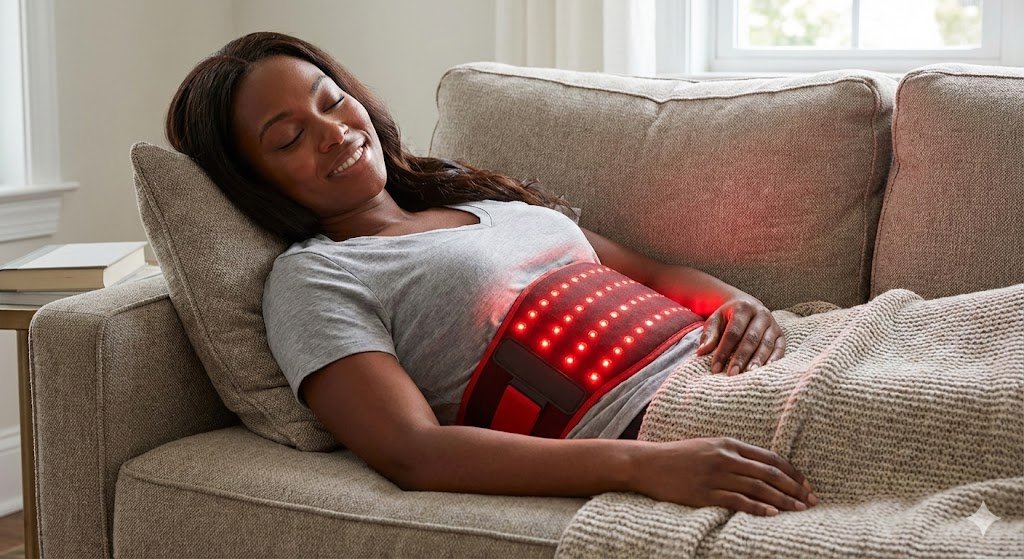
If you had told me five years ago that I would be lying under a red light panel as part of my monthly wellness ritual, I probably would have raised an eyebrow. As an herbalist, my world has always revolved around plants, tinctures, and the ancient wisdom of traditional remedies. But as I have learned over and over again on this journey, true holistic wellness means staying open to the tools that serve your body best, even when they come with a wavelength instead of a leaf.
Today, I want to share why red light therapy has earned a permanent place in my menstrual wellness routine, and how it works alongside the herbal protocols I already trust.
What Exactly Is Red Light Therapy?
Red light therapy, also known as photobiomodulation or low-level light therapy, uses specific wavelengths of red and near-infrared light (typically between 630nm and 850nm) to penetrate the skin and interact with cells at a mitochondrial level. When these wavelengths reach your cells, they stimulate the production of adenosine triphosphate (ATP), which is essentially the energy currency your cells use to function, repair, and regenerate.
It is not UV light, so there is no tanning or burning involved. Think of it more like giving your cells a gentle, energizing nudge. The research around red light therapy has been growing steadily, with studies exploring its potential benefits for skin health, muscle recovery, joint comfort, and, increasingly, reproductive and hormonal wellness.
The Connection Between Light and Menstrual Wellness
What first caught my attention was learning about the relationship between light exposure and the menstrual cycle. Our bodies are deeply responsive to light. The hypothalamus, which plays a central role in regulating hormones, is directly influenced by light signals. This is part of why seasonal changes can affect our cycles, mood, and energy levels.
Emerging research suggests that red and near-infrared light may support the body in ways that are particularly relevant during menstruation:
- Circulation support: Red light therapy may help promote healthy blood flow to the pelvic region, which can be beneficial during the menstrual phase when circulation patterns naturally shift.
- Comfort and ease: Some studies have explored how photobiomodulation may help modulate the inflammatory response, which is directly connected to the cramping and discomfort many of us experience.
- Cellular energy: By supporting mitochondrial function, red light therapy may help counteract the fatigue and low energy that often accompany the first few days of a cycle.
- Mood and relaxation: The warm, soothing quality of red light naturally encourages a parasympathetic state, helping the body shift into rest-and-repair mode.
How I Incorporated It into My Routine
I started small. During my luteal phase, about a week before my period, I began using a red light panel for 15 to 20 minutes in the evening. I would place it near my lower abdomen and simply rest, sometimes combining it with deep breathing or a guided meditation. The warmth was immediately comforting, and I noticed that the ritual itself became a signal to my body that it was time to slow down.
Over a few cycles, I began to notice some shifts. The intense cramping I had experienced on day one and two felt less sharp. My energy levels during menstruation, while still lower than usual (which is natural and appropriate), felt more manageable. And the overall experience of my period felt less like something I was enduring and more like something I was moving through with greater ease.
My Red Light Therapy Schedule by Cycle Phase
After several months of experimentation, here is how I currently use red light therapy throughout my cycle:
- Menstrual phase (days 1-5): 15 minutes daily, focused on the lower abdomen. I pair this with warming herbal teas like ginger and cramp bark.
- Follicular phase (days 6-13): I reduce to every other day, focusing on overall vitality. This is when I feel most energized naturally, so the sessions are shorter, around 10 minutes.
- Ovulatory phase (days 14-16): I take a break or use it briefly for relaxation only.
- Luteal phase (days 17-28): I increase back to daily sessions, 15 to 20 minutes, as a proactive measure before menstruation begins. This is when I also lean heavily on my herbal support protocols.
Pairing Red Light Therapy with Herbal Support
What I love most about this approach is how beautifully red light therapy complements herbal wellness. They are not competing tools; they are partners. While the light works at a cellular and energetic level, herbs work through their biochemical compounds, supporting the body's hormonal pathways, soothing the nervous system, and nourishing tissues from the inside out.
During my menstrual phase, I combine my red light sessions with herbs that have traditionally been used for cycle comfort: cramp bark for uterine tension, ginger for warmth and circulation, and raspberry leaf for overall uterine tone. During my luteal phase, I add adaptogens like ashwagandha and vitex to support the hormonal transition that is happening beneath the surface.
This layered approach, addressing wellness from multiple angles, is really what holistic care means to me. It is not about choosing one modality over another. It is about building a toolkit that honors the complexity of our bodies.
What I Want You to Know Before You Try It
If you are curious about adding red light therapy to your own wellness practice, here are a few things I have learned along the way:
- Quality matters. Not all red light devices are created equal. Look for panels that clearly state their wavelength (630-660nm for red, 810-850nm for near-infrared) and their irradiance (power output). Budget panels often do not deliver therapeutic doses.
- Consistency is key. Like herbs, red light therapy works best as a regular practice, not a one-time fix. Give yourself at least three full cycles to assess how it feels for you.
- It is not a replacement for medical care. If you are experiencing severe menstrual pain, unusually heavy periods, or other concerning symptoms, please work with your healthcare provider. Red light therapy and herbs are wellness tools, not medical treatments.
- Listen to your body. Some days I skip my session because my body is telling me to simply rest in stillness. That is okay. Wellness should never feel like another obligation on the to-do list.
The Bigger Picture: Reclaiming Our Cycles
For so many of us, our menstrual cycles have been framed as inconveniences, something to suppress, ignore, or power through. What I have found through this journey, both with herbal medicine and now with red light therapy, is that our cycles are actually invitations. They invite us to tune in, to adapt, and to give our bodies the specific support they are asking for in each phase.
Adding red light therapy to my menstrual wellness routine has been one more way of saying yes to that invitation. It has deepened my relationship with my cycle and given me another tool for navigating the hormonal shifts that come with perimenopause with more grace and less resistance.
If you are on a similar path of building your own holistic wellness toolkit, I encourage you to stay curious. The best routine is the one that evolves with you.
Ready to Build Your Holistic Cycle Support Toolkit?
Explore our Blue Moon Collection, curated herbal blends designed to support women through every phase of their hormonal journey.
Explore the Collection